
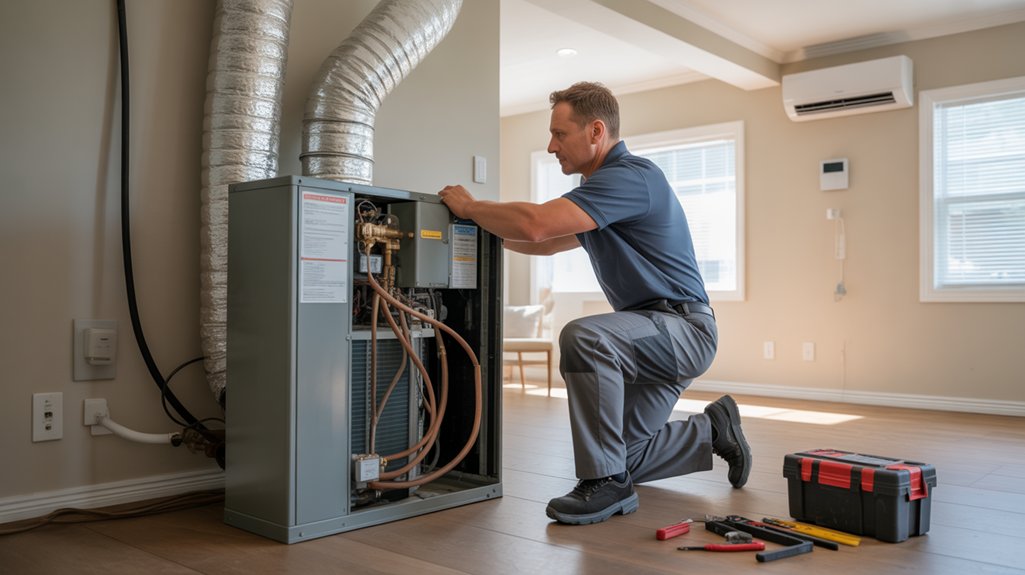
If your AC runs but the rooms still feel warm, you’re probably dealing with more than a simple comfort issue. Weak airflow can point to clogged filters, duct leaks, refrigerant trouble, or failing electrical parts that quietly limit cooling. In Costa Mesa, those small problems can turn into higher bills and uneven temperatures fast. The next step is figuring out which one’s holding your system back.
Main Points
- Weak airflow and warm rooms often come from clogged filters, blocked vents, or dirty indoor components reducing circulation.
- Low refrigerant, frozen coils, or leaky ducts can prevent your AC from cooling Costa Mesa rooms properly.
- A thermostat placed poorly may read temperatures incorrectly and shut cooling off too soon.
- Bad capacitors, failing blower motors, or loose wiring can cause weak fan operation and inconsistent airflow.
- Call for prompt AC repair in Costa Mesa when rooms stay warm, airflow feels weak, or the system makes unusual noises.
Why Your AC Runs but Rooms Stay Warm
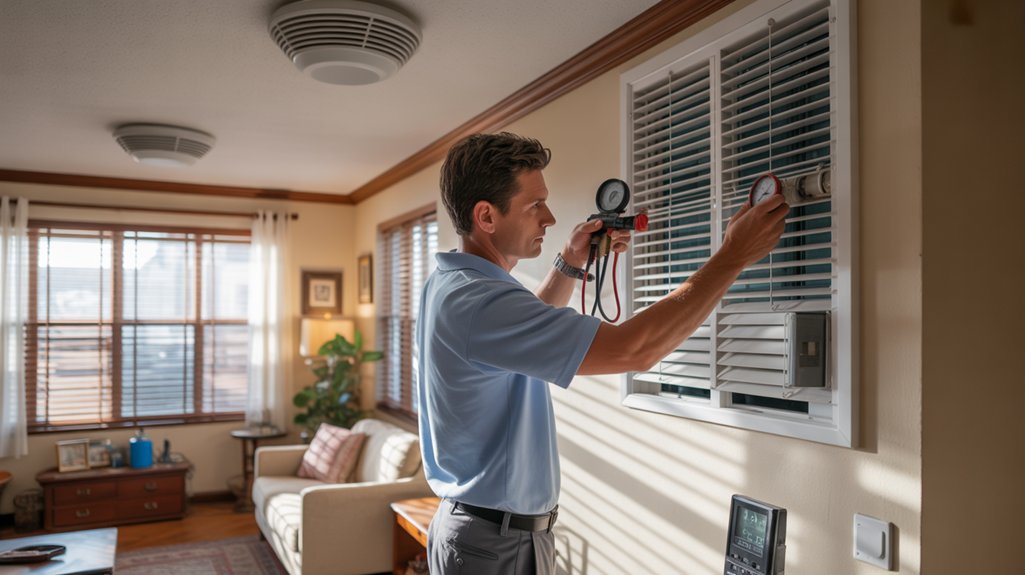
If your AC is running but the rooms still feel warm, the system is usually struggling with airflow, refrigerant, or thermostat issues.
If your AC runs but rooms still feel warm, airflow, refrigerant, or thermostat issues are often the cause.
You might hear the unit cycle normally, yet little cool air reaches your living space. When that happens, your system can’t remove enough heat to match the temperature you set.
A thermostat placed in the wrong spot may read the room incorrectly and shut the cooling off too soon. Low refrigerant can also keep the coil from absorbing heat effectively, so the air never feels truly cold.
In some cases, you’re asking the system to cool more space than it can handle. When the temperature stays uneven, you need a focused inspection to find the exact fault and restore comfort.
Common Causes of Weak Airflow
Weak airflow often starts with a clogged air filter, blocked vents, or a blower issue that keeps enough air from moving through your home. You might also notice hidden duct leaks, a failing fan motor, or frozen evaporator coils reducing circulation and comfort.
- Restricted return air
- Loose duct connections
- Weak blower performance
- Dirty indoor components
- Thermostat control errors
When airflow drops, your AC can’t deliver cool air evenly, so some rooms feel stuffy while others cool slowly. You may hear unusual noises, feel weaker supply air, or notice longer run times. These symptoms point to a system that’s struggling to move air efficiently.
Catching the cause early helps you avoid bigger repairs and restore steadier comfort across your home.
Check the Air Filter and Vents First
Start with the easiest fixes: check your air filter and make sure every supply and return vent is open and unobstructed. If your filter looks gray, packed with dust, or overdue for replacement, swap it out right away. A clogged filter can choke airflow, raise indoor temperatures, and make your system work harder than it should.
Next, walk through your home and inspect every vent. Don’t block supply registers with rugs, furniture, or curtains, and keep return grilles clear so air can circulate freely. You should also verify that vent covers are fully open, not half-closed from cleaning or adjustments. These quick checks often restore stronger airflow fast and can help your AC cool rooms more evenly without calling for repair.
When Ductwork Problems Cut Cooling Power
If your AC still can’t keep up, leaky duct joints may be letting cool air escape before it reaches your rooms. You might also have restricted airflow paths that force your system to work harder for less cooling.
That’s why ductwork issues can cut comfort fast and raise your energy use.
Leaky Duct Joints
Leaky duct joints can quietly drain your AC’s cooling power, letting chilled air escape before it ever reaches your rooms. You may notice warm spots, higher bills, and a system that runs longer than it should. When joints loosen, sealant cracks, or tape fails, conditioned air slips away behind walls and in attics.
- You lose comfort in select rooms.
- Your AC works harder than needed.
- Energy costs rise without warning.
- Dust can enter through gaps.
- Repairs can restore lost efficiency.
A technician can inspect seams, reseal weak connections, and tighten problem areas. Don’t ignore these hidden leaks; they can make your home feel uneven and uncomfortable fast.
Restricted Airflow Paths
When ducts are blocked, crushed, or poorly routed, your AC can’t move enough air to cool your home evenly. You may notice weak vents in some rooms, hot spots in others, and longer run times that waste energy.
Bends, kinks, debris, undersized runs, and closed dampers all narrow the path and starve your system of airflow. That strain can raise indoor humidity and make the blower work harder than it should.
Check visible ducts for pinches, disconnected sections, or heavy dust buildup. If the layout is the problem, you may need duct repairs, resealing, or rerouting to restore balanced cooling.
A trained technician can measure static pressure and pinpoint where airflow is getting blocked.
Signs Your AC Needs Refrigerant Repair
One of the clearest signs your AC may need refrigerant repair is weak cooling, especially if the system runs longer than usual but still can’t keep your home comfortable. You may also notice warm air from vents, ice on the refrigerant lines, or a hissing sound near the unit.
These clues often point to a leak, and low refrigerant can keep your system from absorbing heat properly.
- Rooms stay muggy even after long cycles
- The AC blows less cool air than before
- Ice forms on the outdoor or indoor lines
- You see oily residue near connections
- Your energy bills climb without extra use
If you spot these symptoms, schedule service quickly. Fast refrigerant repair helps restore comfort and protect your system from bigger damage.
How Electrical and Fan Issues Affect Airflow
If your AC’s airflow seems weak or uneven, electrical problems or a failing fan motor may be to blame. When wiring, capacitors, or relays misfire, they can slow the indoor blower or stop the outdoor fan from moving air properly. That leaves you with rooms that feel stuffy and temperatures that don’t match the setting. You may also hear humming, rattling, or see the fan start and stop unpredictably.
| Issue | Effect on airflow |
|---|---|
| Bad capacitor | Fan starts weakly |
| Loose wiring | Intermittent airflow |
| Failing motor | Reduced air movement |
| Faulty relay | Fan won’t run consistently |
Because the system relies on steady electrical flow, even a small fault can limit circulation across your home. Better airflow starts with reliable fan operation.
When to Call for AC Repair in Costa Mesa
Call for AC repair in Costa Mesa as soon as you notice weak airflow, warm air, strange noises, or frequent cycling, because these signs often point to a problem that can get worse fast. You shouldn’t wait for the system to fail, especially during hot weather. A prompt repair can restore comfort, protect your equipment, and keep energy bills from climbing.
- Air barely comes from your vents
- Rooms stay warm despite cooling settings
- The unit turns on and off too often
- You hear rattling, buzzing, or grinding
- Ice forms on coils or lines
If you spot any of these issues, schedule service right away. Early action helps you avoid bigger repairs, uncomfortable days, and unnecessary strain on your AC.
See The Next Post
If your AC runs but your rooms stay warm, you need more than a quick reset—you need a clear fix. You can start with a clean filter, open vents, and clear ducts; you can also watch for refrigerant leaks, frozen coils, and failing fans. When weak airflow keeps coming back, calling for air conditioning repair in Costa Mesa, CA helps you restore comfort, improve efficiency, and keep every room cool.


0 Comments