
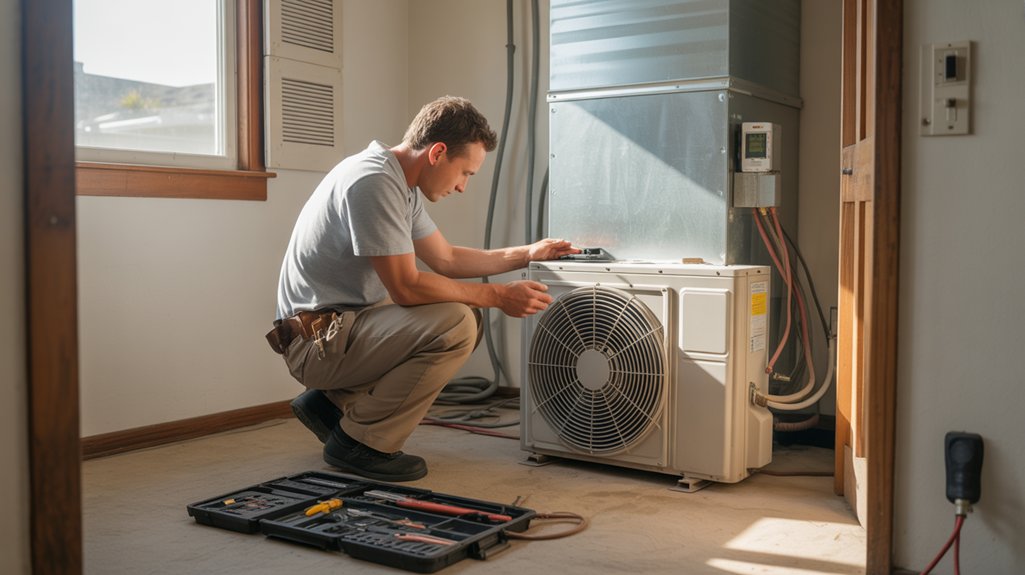
Your home feels hot, yet the AC keeps running, and that mismatch usually points to a fixable problem. If your system in Costa Mesa won’t cool properly, a dirty filter, low refrigerant, a blocked coil, or a blower issue could be reducing airflow and performance. You can spot some signs yourself, but the real cause may be hiding in the parts you can’t see.
Main Points
- Dirty filters, blocked coils, low refrigerant, or failing compressors can keep a Costa Mesa home from cooling properly.
- Check the thermostat, air filter, breakers, and outdoor unit before calling for AC repair.
- Warm vents, ice on coils, hissing, or oily residue often indicate a refrigerant leak needing a technician.
- Weak airflow, humming, grinding, or no startup may point to blower, capacitor, or electrical problems.
- Prompt professional repair restores reliable cooling, prevents further damage, and reduces the risk of total system failure.
Why Your AC Won’t Cool Properly
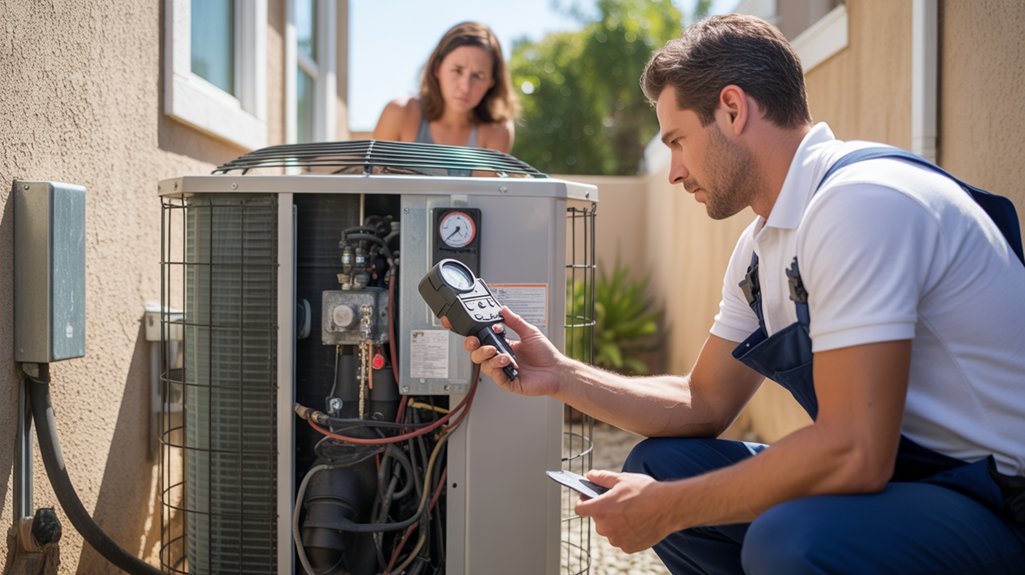
If your AC isn’t cooling properly, the problem could be as simple as a dirty filter or as serious as a refrigerant leak.
You might also have low refrigerant from a leak, blocked coils, a failing compressor, or a blower issue that limits airflow through your home.
When any of these parts struggle, your system runs longer, wastes energy, and still leaves rooms warm.
You can’t always spot the cause by looking at the unit, especially when the problem starts inside sealed components.
In Costa Mesa’s heat, that extra strain can turn a small issue into a bigger repair fast.
If your AC blows weak air or cycles constantly, you need a trained technician to find the fault and restore steady cooling before more damage occurs.
Check the Air Filter and Thermostat
Before you assume your AC has a major repair, check the simplest trouble spots first: the air filter and the thermostat.
Before assuming a major AC repair, check the simplest trouble spots first: the air filter and thermostat.
A dirty filter blocks airflow, so your system struggles to move cool air through the house. Replace it if it looks gray, dusty, or clogged. In Costa Mesa, where dust and coastal air can build up fast, you may need to change it more often than you expect.
Next, verify your thermostat settings. Make sure it’s set to cool, the temperature is lower than the room temperature, and the fan is on auto. If the display seems blank or inaccurate, replace the batteries.
Small fixes like these often restore comfort quickly and save you from unnecessary service calls.
Look for Refrigerant Leaks and Low Charge
Low refrigerant can leave your AC blowing warm air, running longer than it should, or freezing up at the indoor coil. You might also notice hissing, oily residue near lines, or ice on the refrigerant tubing. These signs point to a leak that needs professional attention, not a quick top-off.
| Sign | What you may see | Why it matters |
|---|---|---|
| Warm air | Weak cooling | Charge may be low |
| Ice | Frost on coil | Refrigerant flow’s restricted |
| Oil spots | Stains near fittings | Leak likely exists |
If your system’s charge is low, adding refrigerant without fixing the leak won’t solve the problem. A trained tech can find the leak, repair it, and restore the proper charge so your AC cools efficiently again.
Spot Electrical or Blower Problems
Next, you should check the blower motor to make sure it’s running properly and moving air the way it should.
You’ll also want to inspect the capacitor for signs of failure, since that can keep the system from starting or running well.
Finally, test the electrical connections to catch loose, worn, or damaged wiring before it causes bigger problems.
Check Blower Motor
If your AC is running but the air feels weak or stops altogether, check the blower motor for electrical or mechanical issues. You can often spot trouble by listening for humming, grinding, or a motor that won’t start. Turn off power first, then inspect the blower compartment for dust buildup, loose wiring, or a jammed fan wheel. A clean, free-moving motor helps push cooled air through your vents.
| What You Notice | What It May Mean |
|---|---|
| Weak airflow | Motor isn’t moving enough air |
| Odd noises | Mechanical wear or obstruction |
| Intermittent operation | Electrical fault in the motor |
| No airflow | Motor may have failed |
If the motor still acts up, call a pro before more damage spreads.
Inspect Capacitor Issues
A failing capacitor can throw your AC off balance, causing hard starts, weak cooling, or a blower that won’t kick on at all.
You may notice the outdoor unit humming, then stopping, or the system taking longer to reach set temperature.
If your indoor fan runs sluggishly, the capacitor could be struggling to give the motor the boost it needs.
You can’t always see damage, but a swollen top, leaking oil, or a burnt smell can point to trouble.
Since capacitors store an electrical charge, you shouldn’t handle them without proper training. A technician can test its performance and replace a weak unit before it strains other components. Fixing capacitor issues early helps your AC recover faster and cool your home more reliably.
Test Electrical Connections
Loose wiring, corroded terminals, or a failing relay can keep your AC from starting or cause the blower to cut in and out. You can spot trouble by checking visible connections at the disconnect, contactor, and blower motor. Look for burn marks, green corrosion, or frayed insulation. If you hear buzzing, smell hot metal, or notice intermittent airflow, shut the system down and call a pro.
| Check Point | What You See | What It Means |
|---|---|---|
| Disconnect | Loose wires | Power loss |
| Contactor | Pitting | Poor switching |
| Relay | Sticking | Blower failure |
| Motor leads | Heat damage | Overload |
| Terminals | Corrosion | Weak flow |
Tighten only accessible screws if you’re qualified. Otherwise, let a technician test voltage, trace faults, and restore steady cooling safely.
When AC Repair Beats Another DIY Fix
If you’ve already swapped filters, checked the thermostat, and reset the unit, you may be hitting the limit of DIY fixes.
When the problem keeps coming back or the system won’t cool at all, you should call a pro. AC repair can save you time, prevent extra damage, and get your comfort back faster.
DIY Limits
Even the handiest homeowner can run into a point where another DIY fix just won’t cut it. You can swap filters, reset breakers, and clear debris, but some cooling problems keep coming back because the issue sits deeper in the system.
If your AC short cycles, blows warm air, or keeps icing up after basic maintenance, you’ve likely hit a DIY limit. You also shouldn’t keep guessing with electrical parts, refrigerant lines, or duct leaks you can’t verify.
Repeated trial and error wastes time and can make the problem worse. At that point, stop chasing quick fixes and focus on the signs that your system needs a proper diagnosis. The goal isn’t to do everything yourself; it’s to know when a simple repair won’t solve the real cause.
Call a Pro
When the same AC problem keeps coming back, it’s time to call a pro instead of trying another quick fix. You’ve already checked filters, breakers, and thermostat settings, so repeated warm air points to a deeper issue. A licensed technician can diagnose electrical faults, low refrigerant, frozen coils, or failing parts before bigger damage sets in.
- You save time by ending the guessing.
- You reduce the risk of costly mistakes.
- You protect your system from extra wear.
- You restore cooling faster and more safely.
In Costa Mesa’s heat, a working system matters. If your unit short-cycles, leaks, or won’t start, schedule air conditioning repair right away. A professional repair can extend equipment life and bring comfort back without another frustrating DIY cycle.
How AC Repair Restores Cooling Fast
Quick AC repair gets your system back on track by pinpointing the cause of weak airflow, warm vents, or short cycling and fixing it before the problem spreads. You feel cooler air sooner because a technician clears blockages, tightens loose connections, replaces worn parts, and resets the system for efficient operation. That fast response can restore even temperatures and cut strain on your equipment.
| Problem | Fix | Result |
|---|---|---|
| Dirty filter | Replace it | Better airflow |
| Low refrigerant | Seal and recharge | Colder vents |
| Faulty capacitor | Replace part | Reliable startup |
When each component works together, your AC can move heat out of your home again without wasted effort. You get quicker relief, steadier comfort, and less stress on the system today.
Call for Costa Mesa AC Repair Help
If your AC still isn’t cooling the way it should, it’s time to call for help in Costa Mesa. A trained technician can find the real problem, explain your options, and restore comfort before the heat gets worse. You won’t waste time guessing or risking further damage.
- You get a clear diagnosis.
- You avoid costly breakdowns.
- You improve indoor comfort faster.
- You protect your system’s lifespan.
When you schedule service, you also get peace of mind from knowing your home’s cooling system is in capable hands. Don’t wait for a total failure or another sweltering night. Reach out for Costa Mesa AC repair help today, and get the steady, reliable cooling your home needs.
See The Next Post
If your Costa Mesa home still won’t cool, why keep guessing when a fast repair can find the real problem? A trained technician can check your filter, thermostat, refrigerant charge, coils, blower, and electrical parts to restore steady airflow and comfort. You’ll avoid bigger breakdowns, wasted energy, and more hot nights. Don’t wait for a total failure—call for professional AC repair now and get your home cool again.

0 Comments